
"climate impact"
2000 article(s) found

What should I do with the coffee grounds after brewing coffee? There are four uses of coffee grounds you don't know.
We know that the coffee industry has an impact on the environment. From planting, processing to transportation and roasting, each step of the coffee supply chain consumes a certain amount of energy, so it has its own carbon footprint. But what about the waste we produce when we drink coffee? Especially our waste coffee grounds? They are inevitable by-products of coffee consumption. Although many of us think it has something to do with

Costa Rican Eco-Coffee-Dota Coffee The world's first carbon-neutral coffee
Professional coffee knowledge exchange More coffee bean information Please pay attention to coffee workshop (Weixin Official Accounts cafe_style) Although the development of global carbon neutral agricultural products is slow, it has gradually taken shape. The most successful example is Costa Rica in Central America, where the multi-tower coffee cooperative has become the first coffee producer in the world to obtain carbon neutral certification.■Costa Rica coffee farm
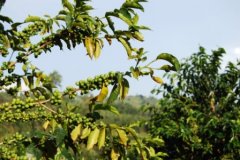
Costa Rica stimulates the main force of the coffee market
Due to the decline in coffee prices on the international market, Costa Rican coffee exports totaled US $306 million in 2015, down 26% from US $412 million in 2012, Costa Rica reported on May 12. In the first quarter of 2016, the average world price of coffee was $1.14 per liter, down 26 per cent from the same period in 2014. Affected by climate change and diseases and insect pests at the same time, the coffee growing area of Colombia
Coffee flavors from different coffee producing areas around the world coffee producing areas in Puerto Rico
PuertoRico in 1736, coffee trees were introduced into Puerto Rico from Martinique. Most of the early coffee was grown by immigrants from Corsica. Coffee farms were once prosperous in the 19th century, but the rise of sugarcane and crop farming and the impact of hurricanes and wars made the coffee industry lag behind and is now recovering. The origin of coffee in Puerto Rico:

Boutique Coffee Costa Rica urgently needs to stimulate the coffee industry
Due to the decline in coffee prices on the international market, Costa Rican coffee exports totaled US $306 million in 2015, down 26% from US $412 million in 2012, Costa Rica reported on May 12. In the first quarter of 2016, the average world price of coffee was $1.14 per liter, down 26 per cent from the same period in 2014. Affected by climate change and diseases and insect pests at the same time, the coffee growing area of Colombia

Introduction to the variety flavor and taste of Galapagos Coffee Manor with a hint of flowers and fruit.
The Galapagos archipelago is now designated as a national park by Ecuador and listed as human property by UNESCO. It is far from land and largely avoids the impact of human behavior on nature. In order to maintain the local natural ecology as much as possible, Ecuador legally forbids the use of all kinds of artificial fertilizers, herbicides and pesticides, so Galapago

Puerto Rican boutique coffee introduces the characteristics of Puerto Rican coffee Puerto Rican coffee taste wave
In 1736, coffee trees were introduced from Martinique to PuertoRico. Most of the early coffee was grown by immigrants from Corsica. Coffee farms were once prosperous in the 19th century, but the rise of sugarcane and crop farming and the impact of hurricanes and wars made the coffee industry lag behind and is now recovering. The origin of coffee in Puerto Rico: Puerto Rico is the most

Introduction to Hasunda Coffee Garden in Ecuador
In 1535, Flatoma de Belanga and others of Spain stumbled upon the Galapagos Islands. Thomas was born in 1487 on the Duro River in the province of Soria, Spain. He was the fourth bishop of Panama at that time. He was ordered to go to Peru. When his ship set sail from Panama on February 23, under the impact of a strong current, they were taken to the unknown surface of the ocean.
Boutique coffee recommends Puerto Rican coffee
In 1736, coffee trees were introduced from Martinique to PuertoRico. Most of the early coffee was grown by immigrants from Corsica. Coffee farms were once prosperous in the 19th century, but the rise of sugarcane and crop farming and the impact of hurricanes and wars made the coffee industry lag behind and is now recovering. The origin of coffee in Puerto Rico: Puerto Rico is the most

Introduction to Hasunda Coffee Garden in Ecuador
In 1535, Flatoma de Belanga and others of Spain stumbled upon the Galapagos Islands. Thomas was born in 1487 on the Duro River in the province of Soria, Spain. He was the fourth bishop of Panama at that time. He was ordered to go to Peru. When his ship set sail from Panama on February 23, under the impact of a strong current, they were taken to the unknown surface of the ocean.

Puerto Rican coffee. Puerto Rican coffee.
In 1736, coffee trees were introduced from Martinique to PuertoRico. Most of the early coffee was grown by immigrants from Corsica. Coffee farms were once prosperous in the 19th century, but the rise of sugarcane and crop farming and the impact of hurricanes and wars made the coffee industry lag behind and is now recovering. The origin of coffee in Puerto Rico: Puerto Rico is the most

Floral and fruity Galapagos Coffee Bean Flavor Taste Aroma Description
This is where Galapagos Coffee is different, because the archipelago is located in a very special position, at the intersection of the Peruvian cold current in the south and the equatorial warm current in the north. Affected by the cold and warm currents, a small ecological environment has been formed locally. The climate here at 500 meters is equivalent to the climate of 900-1800 meters inland. This terrain is ideal for very hard coffee beans (SHB) with high acidity.

A brief introduction to the elegant flavor and flavor characteristics of fine coffee beans in Silver Mountain Manor, Jamaica.
After going through many hurdles, Blue Mountain Coffee has rich aroma, round and soft taste, as well as a little fruit flavor, and moderate roasting can highlight its distinctive flavor. It is one of the sweetest coffee in the world, and its taste is described as: it gives me the quality of a gem, and it is as precious as a gem. It's complex, but very gentle.

Introduction to Panamanian Coffee Flavor description Variety treatment method and Taste Manor
Panamanian Coffee Flavor describes the region where varieties are produced. Panama is also the narrowest country that shares the Atlantic and Pacific coastlines. And this has a far-reaching impact on coffee production. In the coffee-producing area of Chiriqu, the hometown of world-famous estates such as Hacienda La Esmeralda, Elida Estate, Finca Nuguo, and Finca La Mula.

Effect of Climate on Coffee Price and Flavor
We all believe that climate change affects the world, but few of us believe that climate change will affect us. We all believe that climate change affects the world, but few of us think that climate change will affect us. But when warm winters and severe storms hit, the effects of climate change will be understood. What will global warming bring to coffee? Climate warming will make bacteria and diseases

The coffee producing area of Puerto Rico.
In 1736, coffee trees were introduced from Martinique to PuertoRico. Most of the early coffee was grown by immigrants from Corsica. Coffee farms were once prosperous in the 19th century, but the rise of sugarcane and crop farming and the impact of hurricanes and wars made the coffee industry lag behind and is now recovering. The origin of coffee in Puerto Rico: Puerto Rico is the most


How do you drink Arabica coffee powder? How do Arabica coffee beans taste good?
Professional coffee knowledge exchange more coffee bean information Please follow the coffee workshop (Wechat official account cafe_style) as a coffee lover, you must know that the origin of coffee, the processing and collection of coffee, the roasting technology of coffee, the grinding and even the final blending of coffee can all have an impact on the flavor of a cup of coffee. Today we will bring you coffee.
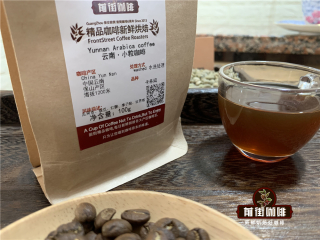
Where is the best coffee producing area in Yunnan? what is the taste of Yunnan small coffee beans?
Professional coffee knowledge exchange more coffee bean information please follow the coffee workshop (Wechat official account cafe_style) Qianjie-Yunnan Baoshan Coffee introduction small grain coffee is suitable for growing in the mountains with an elevation of 800m to 1800m, if the altitude is too high, it will taste sour and too low will taste bitter. Most of the small grains of coffee are planted at altitude

Flavor description of Robusta coffee beans Variety characteristics Taste grindness Introduction
Robasta beans This is actually a standardized process for professional cup testing systems. For the general public who drink coffee is just a simple hobby, there is really no need to be serious. Moreover, the taste itself is a very subjective thing. I think it is good to drink coffee beans. In addition to the general classification of coffee beans, different soils and climates also have great quality of coffee beans.